
Levers
Directed by RHAYNE VERMETTE
Cinematography by RHAYNE VERMETTE
Words by HILARY BOVAY
It was my first time attending TIFF, and I had been cautioned by my seasoned festival-going friend that films in the Wavelengths series were “auteur shit.” On the TIFF website, they’re described as “Daring, visionary, and autonomous voices. Film art in the cinema and beyond.” I had only chosen one film from Wavelengths in my debut slate. Levers jumped out at me when I combed through the list of synopses for two reasons:
“...a community that must grapple with a shaken sense of stability after a blast plunges them into a day of total darkness.”
and
“...working with grainy 16mm, shot here, in the filmmaker’s words, ‘on some broken Bolex cameras.’”
Enthralled by the wonder of how someone could capture a day of total darkness, as well as having a personal penchant for Bolexes in particular, I knew this wouldn’t disappoint. The mysterious, textural quality of Levers hooked me in from its first frames. Hands drenched in hot sunlight chipping away at a stone, its enormity unknowable as its edges bleed off the frame. The unsettling echoing clang of metal hammer hitting metal wedges. The stone cleaves. Elsewhere, industrial machines etch numbers, symbols, latitude and longitude into glossy rock. A truck hauls an angular shape draped in white. Red cloth curves and bends in the wind. Something feels like it is beginning—we can’t yet say what.
Months later, I spoke with director and cinematographer Rhayne Vermette about the ideas that sparked Levers, allowing spontaneity to inform every shot, the feelings Winnipeg stirs in a person, and freeing rocks from their cages.
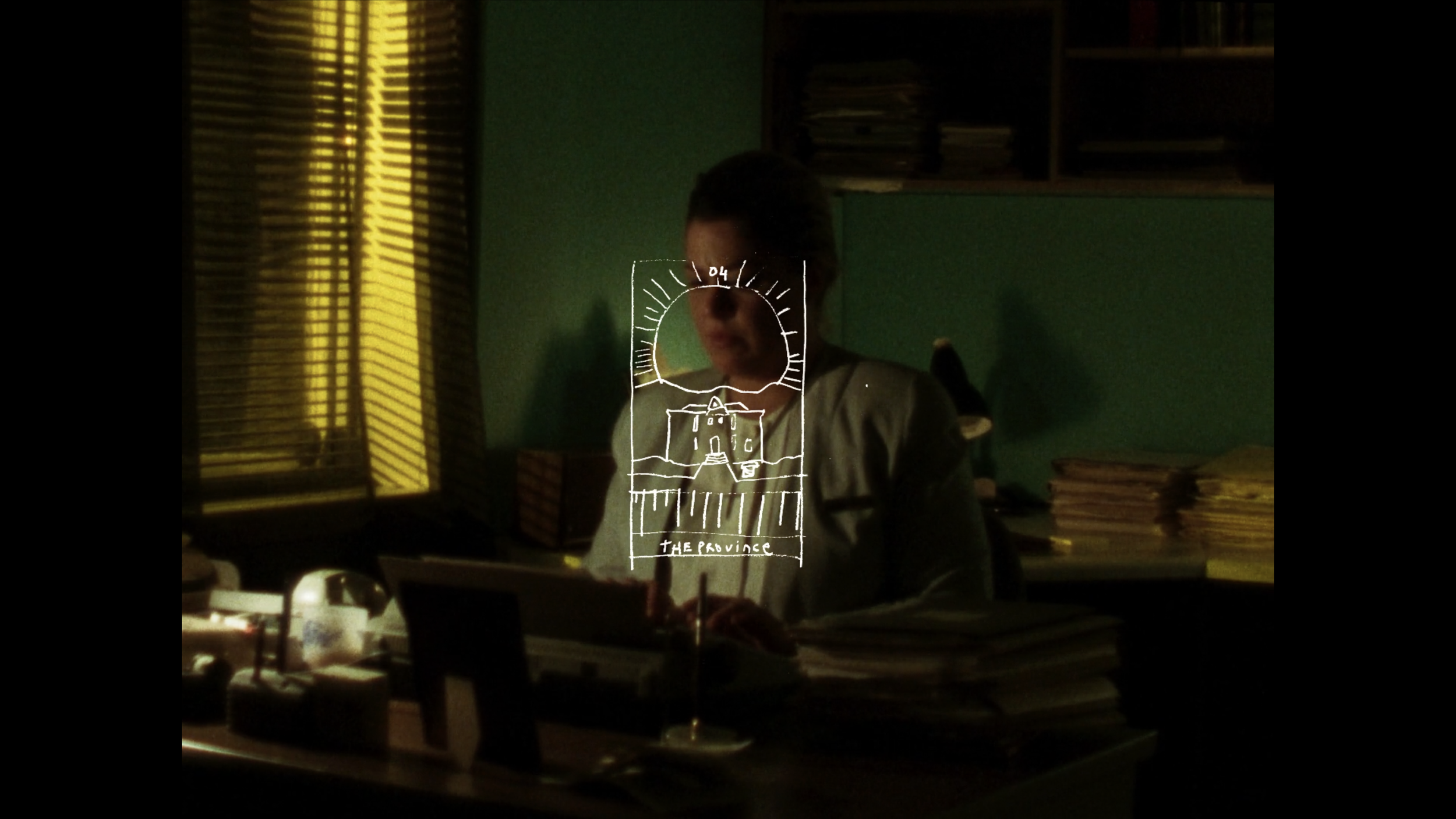
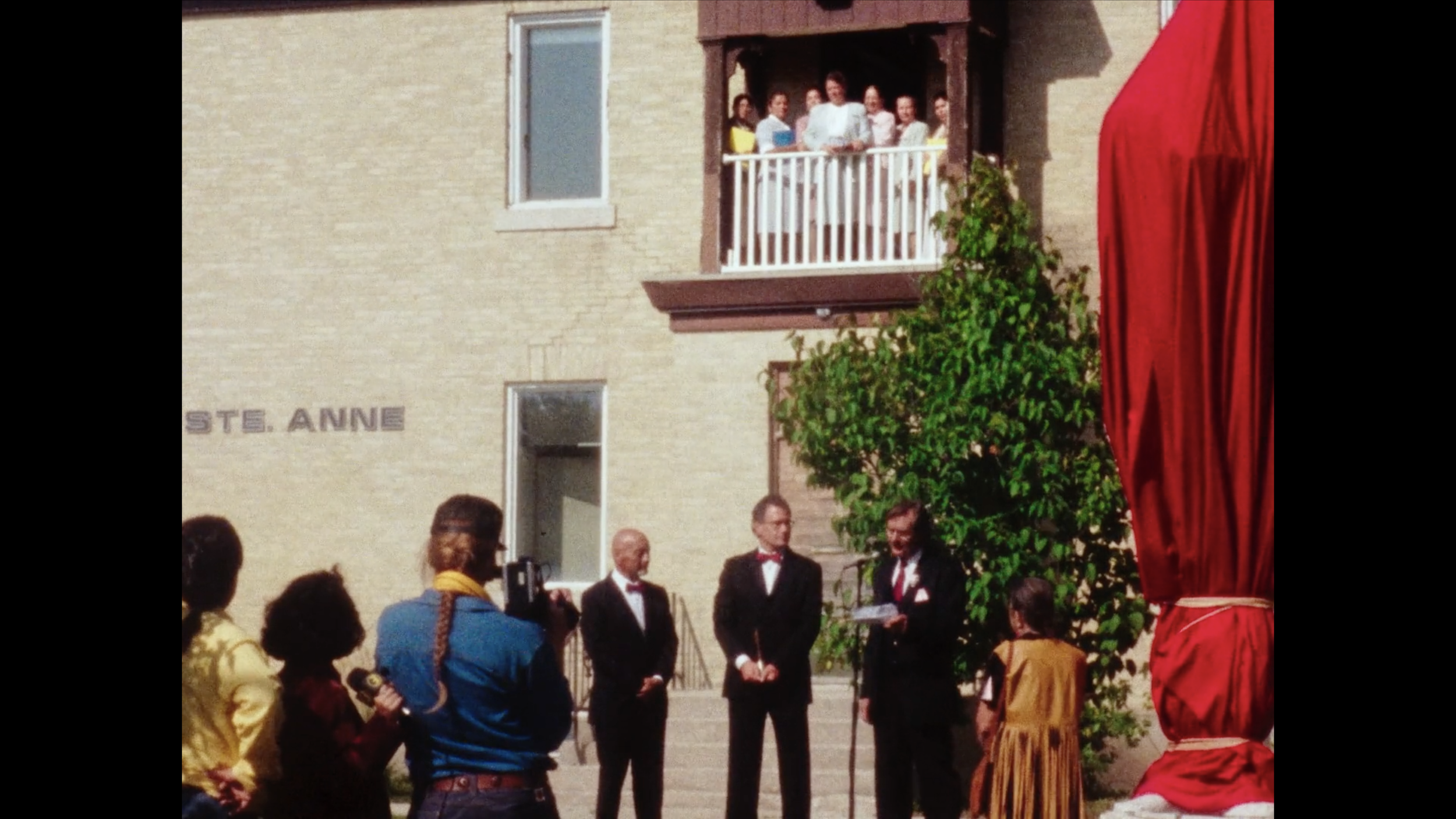
Stills from Levers directed by Rhayne Vermette
Montage: Hi, how are you?
Rhayne: Okay, how are you doing?
M: Good, it's nice to meet you. This is my very first interview for Montage, so thanks for being game. How was all your recent travel? I feel like you've been traveling a lot.
RV: Yeah, I do about 2 trips a month or so…I'm grateful. I think a lot of people would love to be in my position, but I'm a homebody. I'm off to New York this week, I'm really looking forward to it.
M: When you're doing all this traveling, is it film-related or personal trips?
RV: Yeah, it's for Levers. Hitting film festivals. It's a weird film, so people kind of love it or hate it. I feel like it's my responsibility to try and be present when I can to try and open the door for people to appreciate it more. Sometimes I feel like my attendance makes people hate it more…
M: No, I feel like it's helpful for people to learn more about it, right? Because you're probably always doing Q&As, or at least giving an intro, which is nice. A little bit of context.
RV: Yeah. It's acutely Manitoban, so I think people who aren't from here might not pick up on the significance of it…reviews and critics will say it's about nothing.
M: I can't even understand that. I feel like there's so much packed into it that I don't even know how you would get nothing from it.
RV: Yeah. I know, it's just mean boys, basically.
M: I wanted to start with talking about the way that you strike such a beautiful balance of shots having an organic feeling while also feeling deeply intentional, and it made me wonder if you rely a lot on storyboards, or if you prefer to shoot more spontaneously.
RV: I don't storyboard at all. I don't know, my approach is really like a documentary. I always think we're making a documentary about how a fiction comes together. I also love my production designer, Janelle Tougas, and I really want to see what she'll come up with with very little limits or constraints, or from me imposing on her. I love to see what the actors will come up with. We're always improvising. So it's like we all collectively figure out how things are going to play out.
I don't understand this idea of building for the camera. I feel like the camera should just live in the world. I'm just gonna come in with my camera and find it out. I like to just be in the space and I like to see what the light is saying, I like to see what the shadows are saying. Maybe a good storyboard artboard artist could write these things, but I don't have that skill. My skill is [that] I see. I'm a good seer, I'm not a maker in that kind of way.
M: You are so good at that. I can tell from watching Levers how you're seeing the spaces, and I'm wondering, too: are you all agreeing to meet at a certain spot? You found the location, and then you get there, and you're like, alright, we're just gonna feel it out together?
RV: Yeah. For Levers I worked with a locations manager, and I also sourced a bunch of locations out myself, based on if they were free or if they had a personal association. Then I let my production designer run loose. And then I love this moment when I'm the first to walk on set, and it's so beautiful and new and exciting and sort of gets me going.
I've worked with various cinematographers. Heidi [Phillips] and Ryan [Steel] were my main hands in cinematography. I shot Dead Lover, I shot my friend Amalie [Atkins]'s documentary Agatha's Almanac; [and] for those films—obviously this is not a slight to them, I love them both so much—but we wanted to make sure we were capturing the action, we wanted to make sure we were well communicating what was happening to the audience. For our incredible actors, we wanted to make sure [that] they were properly lit and that the dialogue was visible.
But for this film…and I think this is something that started with my first film St. Anne, where, again, I was working with non-actors, [so] it’s not really about the acting, it’s kind of more about hiding the acting. [laughs] So Ryan, Heidi and I would approach the scene not thinking about a medium shot [or a] close-up. You know, ping-ponging between close-ups, establishing shots…[instead] it was like, how could we obscure the gaze? Is there an interesting reflection? Is there an interesting shadow? How could we make this enigmatic? How can we make this world confusing? How could we have our character blocking occur within the same frame? How could we have the character come in and intersect or obscure the frame at some moment? It was really about how can we interrupt the expectation?
“How could we obscure the gaze? Is there an interesting reflection? Is there an interesting shadow? How could we make this enigmatic? How can we make this world confusing?”
I think the Western logic, the Western gaze wants to dissect an image and understand everything. And we have these 4K, hyper well-lit, sharp Hollywood films.
M: Right.
RV: I just wanted darkness, and I just wanted to confuse people. I feel like the world would be so confusing if the sun didn't rise for a day. I feel like our grasp on reality would be slippery, so I wanted slippery.
So people are always through windows, through mirrors. And I'm working with non-actors who are just down to play and have no kind of expectation of what is right or wrong, and they were down to try anything. The motivations were very different for this film.
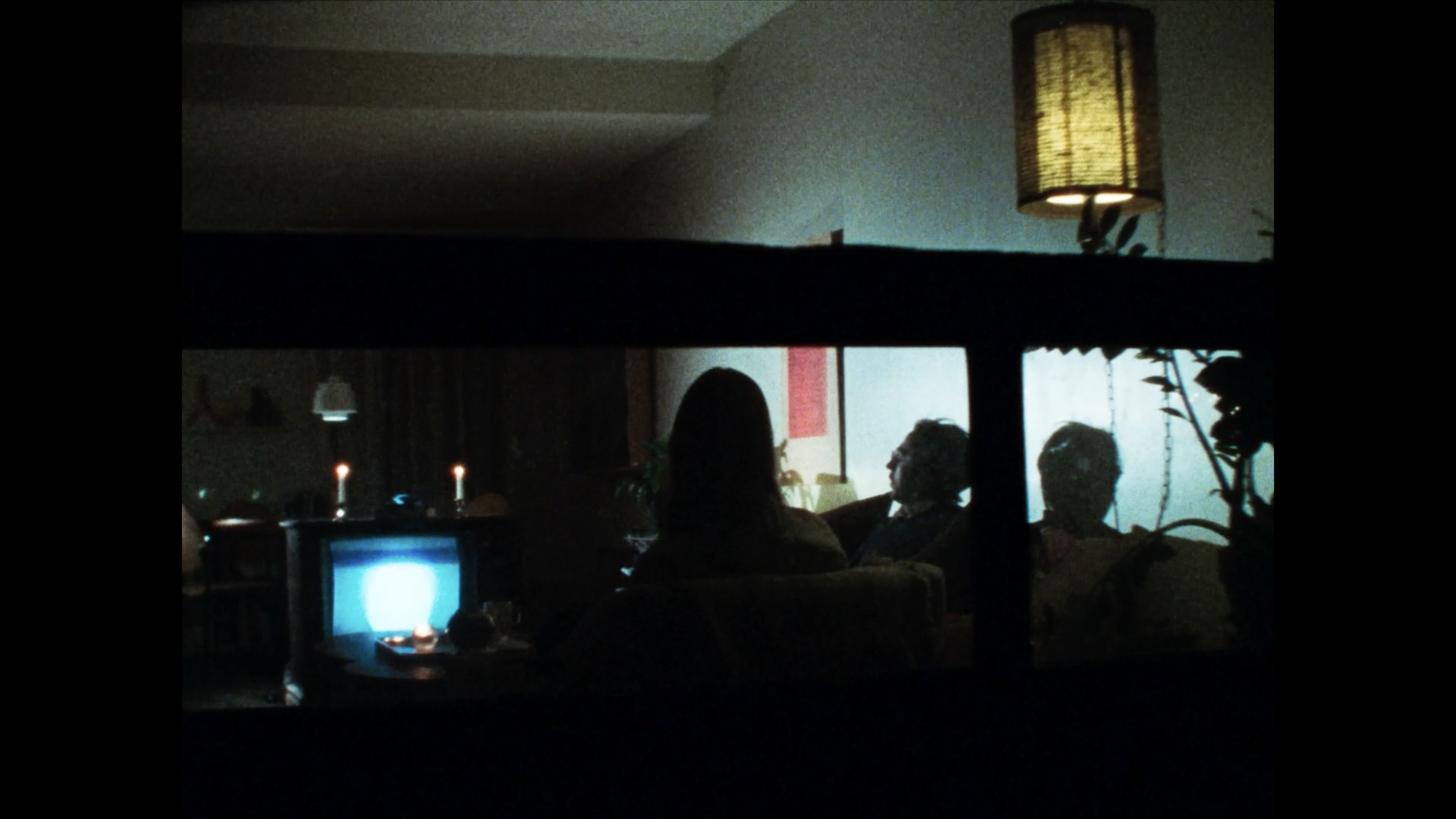
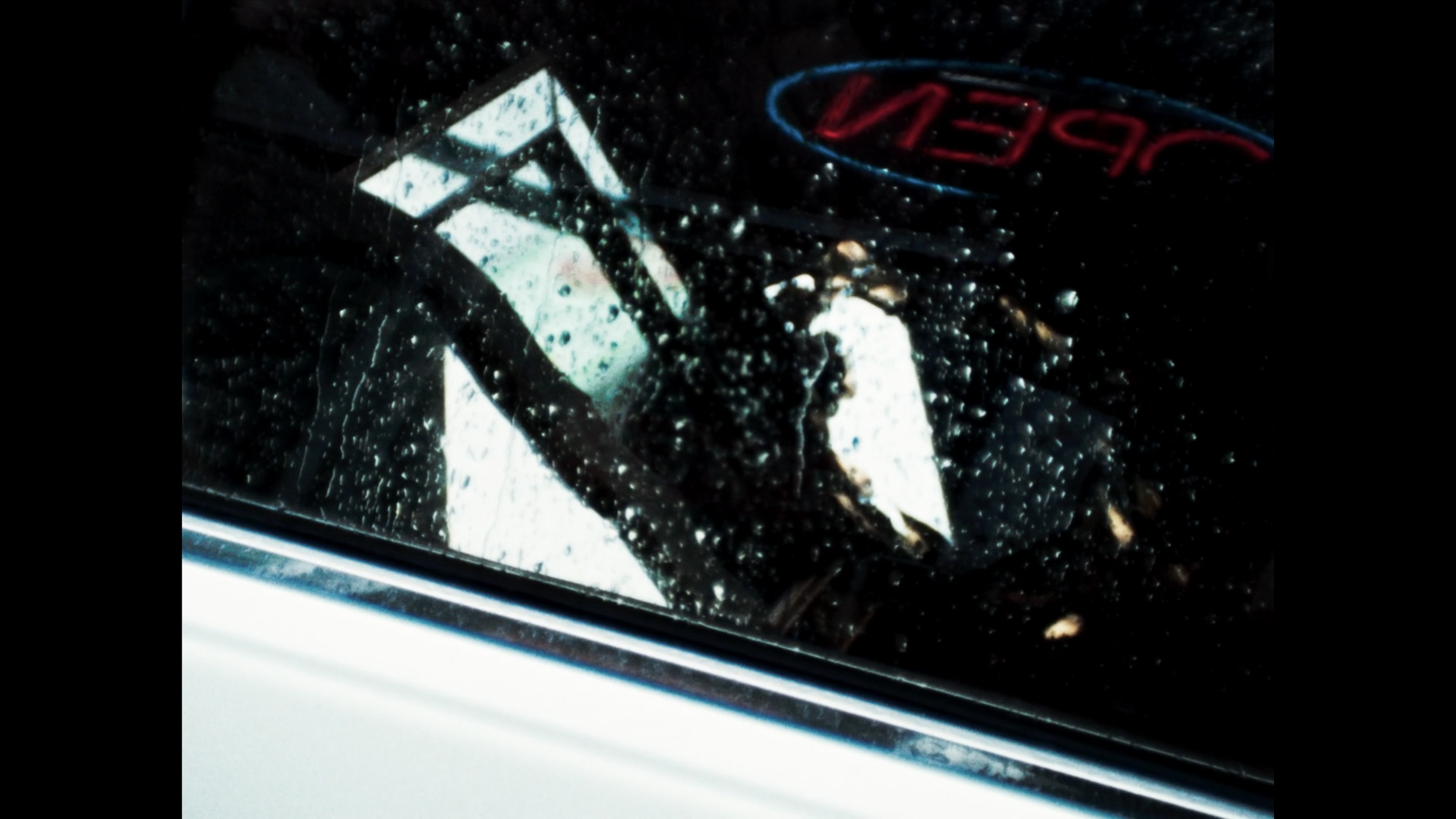
M: It's funny, you're touching on so many things I wrote to ask. I love how much you use shadows, and the way you're shooting people, which is so different from a lot of typical stuff that we see. I love that we're seeing outlines of faces a lot of the time, or we're shooting from behind, or we're just seeing the silhouette, or we're seeing their shadow on a paper. Can you tell me a little bit about how you shot with the amount of shadows and darkness, and were you often underexposing, or what's your process for that?
RV: We would just move through the scene together with Janelle, the actors, and the three camera folks, and we'd just have the actors play. We'd be moving around with our cameras—they're Bolex cameras, so they're very lightweight—and we'd try to catch those moments and those glimpses. That shot of Andrina [Turenne]'s shadow projected on the paper—I was shooting something else of her, and then caught that shadow, so then I was like, that's what we should do. So it's very sort of shooting from the hip, shooting improvisationally, being within the world, being within that moment.
M: Are you adding any artificial lights, or are you using everything that's naturally in the scene?
RV: We had a set of 3 or 4 lights that I bought off eBay, and some gels. That's what we had to work with.
Most of the film is shot on Ektachrome film stock, so that's why it's quite dark. Because we had very minimal lights and because I line produce the film, I'm very skeptical of producers and exploitative behavior. With my first feature, St. Anne, it was non-hierarchical, it was low budget but we all got paid the same; and so for this one it was still non-hierarchical, but I wanted to pay people super well, so everybody was making a really amazing wage. So then other things have to be compromised. So we used my cameras, which were janky. We used a cheap lighting set kit I bought off eBay. So kind of work[ing] within that constraint.
M: Yeah, but that makes you more creative as well, right?
RV: Yeah. I think especially when I worked on Grace [Glowicki]'s movie [Dead Lover], I kind of got a sense of what DOPs work like—and they have all these cameras, and they put all this shit on it, and they put all these monitors, so then they need 10 guys to run all the shit. It just felt like technical prowess over actual skill. It felt like maybe the art form isn't really about seeing anymore. So with this film, I was like, I just want our eyes to be our creative tool. Which is why the framing is all fucked up and all that kind of stuff.
M: I love it, though. I think that it comes through beautifully, the way that you see.
We talked about the way that you shoot people; for a lot of them, it's either in silhouette, or we're only seeing a suggestion, but then often, there's also a really beautiful extreme close-up of hands or eyes, and I really liked the contrast of that. Can you talk about adding those in?
RV: Yeah, I think it's just thinking about a micro and a macro world. The script was based on the Tarot, which is kind of separated between micro and macro.
And loving Val [Vint]'s face and the wrinkles on her face. You don't really see women like Val in films, you know? So it was like, we have to get a close-up of her smoking.
M: One of my favorite shots.
RV: Her whole life is on her face.
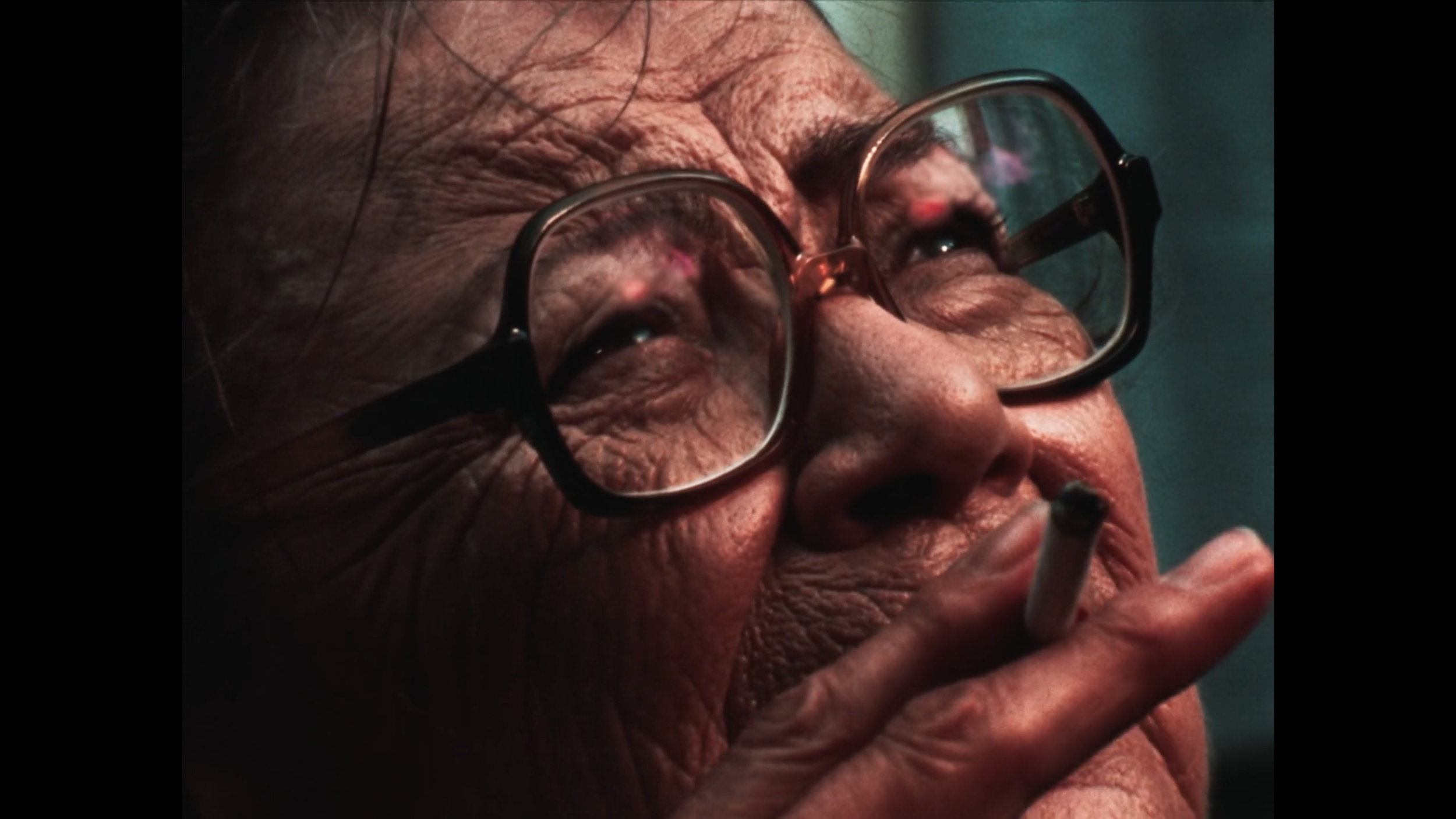
But again yeah, not a lot of it is pre-thought out, it's kind of all in the moment. Also, based on time constraints…so sometimes it's easier to shoot the hand than try to get a performance. Or we could shoot the hand and put a sound over it.
My sets are very chaotic, [there's] a lot of emergent talent on the set. A lot of funny visual decisions are made to appease the chaos or whatever problem or whatever labor gap we’re faced with.
M: Can you tell me about your inspiration for the key incident of the day of total darkness where the sun doesn't rise? Where did that idea come from?
RV: I mean, I love the sun, I'm a Leo. I think what keeps me in Manitoba and Winnipeg is we have a lot of sunlight and these expansive skies. I started thinking about this film [and] researching this film during pandemic times. Where it felt like the world was changing…
M: Yeah.
RV: I love darkness; I've made these animations called A Black Screen Too and Black Rectangle, which is all about darkness, and this short film, Tudor Village, which is about an eclipse.
I was having thoughts of the world as a hologram, or some sort of celestial unveiling…something occurs that would make us question the stories we’re told by bureaucracy or NASA or whatever.
M: Which is so related to the pandemic as well.
RV: It was a moment where I questioned everything. I started deep diving Sun Ra, and deep diving conspiracy theories. And I also had the idea of a sculpture walking off its pedestal, spoiler alert. That sculpture is of Louis Riel, which was commissioned by the province of Manitoba in the 1970s.
M: Okay, so that's a real sculpture.
RV: Yeah, and when it was revealed, it was loathed. People hated it, because it's Louis Riel. It was made by Marcien Lemay and Metis architect Étienne Gaboury. He's naked, and his body is contorted, and it's very abstracted. Over all of the conflicting ideas about this sculpture, [it] was eventually replaced in the 1990s with a very conventional image of Louis looking much like the businessman holding the Manitoba Act.
So I just had this idea of what happens when an image says no or doesn't behave the way you want it to. An image that has its own sovereignty. And the sun just says no, you know?
“So I just had this idea of what happens when an image says no or doesn't behave the way you want it to. An image that has its own sovereignty.”
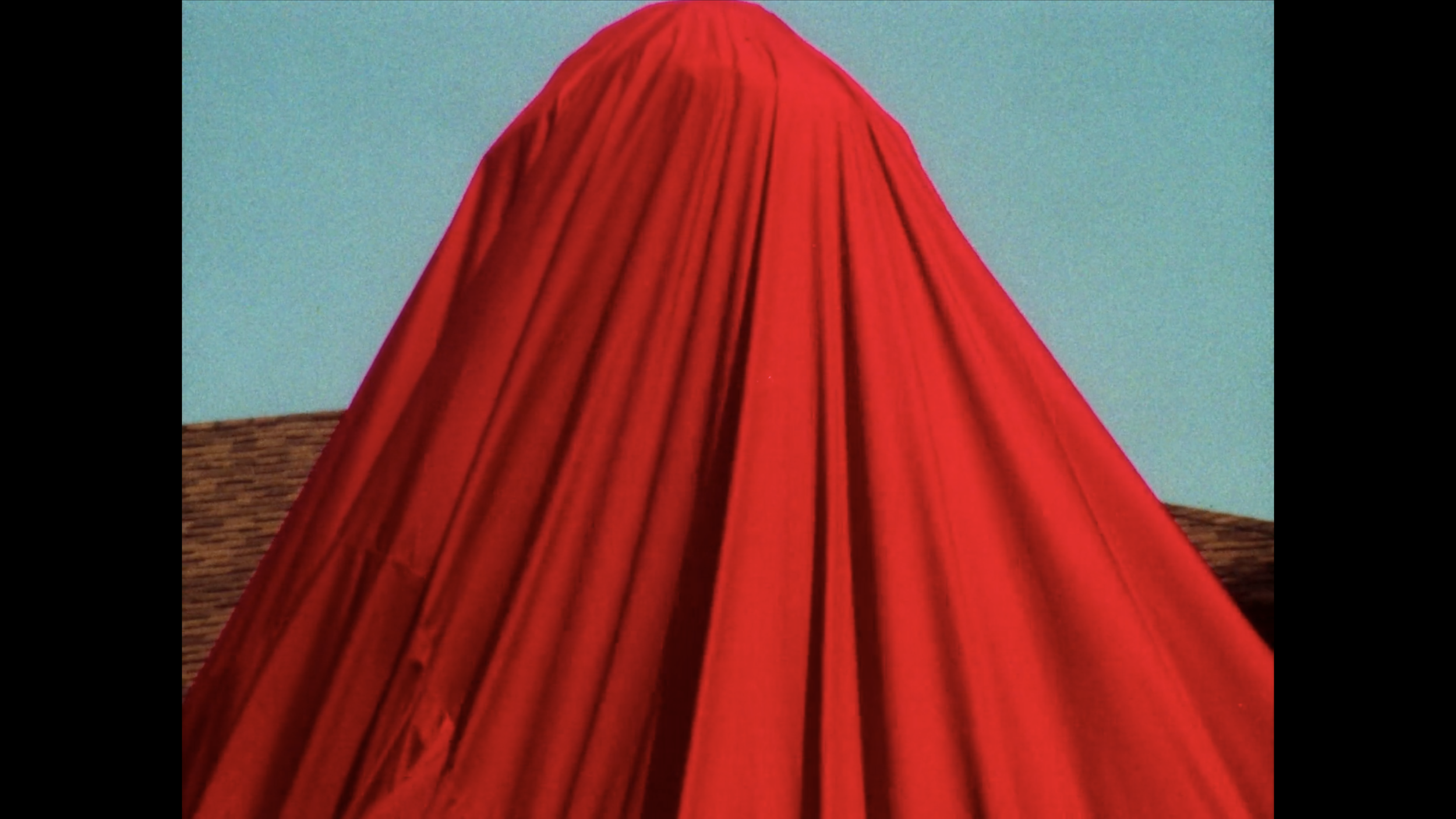
RV: And pairing the idea of the sun with this created image from stone, and trying to pair up Sun Ra…the dark angel with Louis Riel, the potential false prophet of the New World.
So yeah, I had these ideas, and I was studying tarot, starting studying theology, occult stuff, and the script is poetry. I had these ideas of the sun and the flashlight and the sculpture and the cloth and just writing things over and over again…until I kind of hit the loop, and the loop was the film.
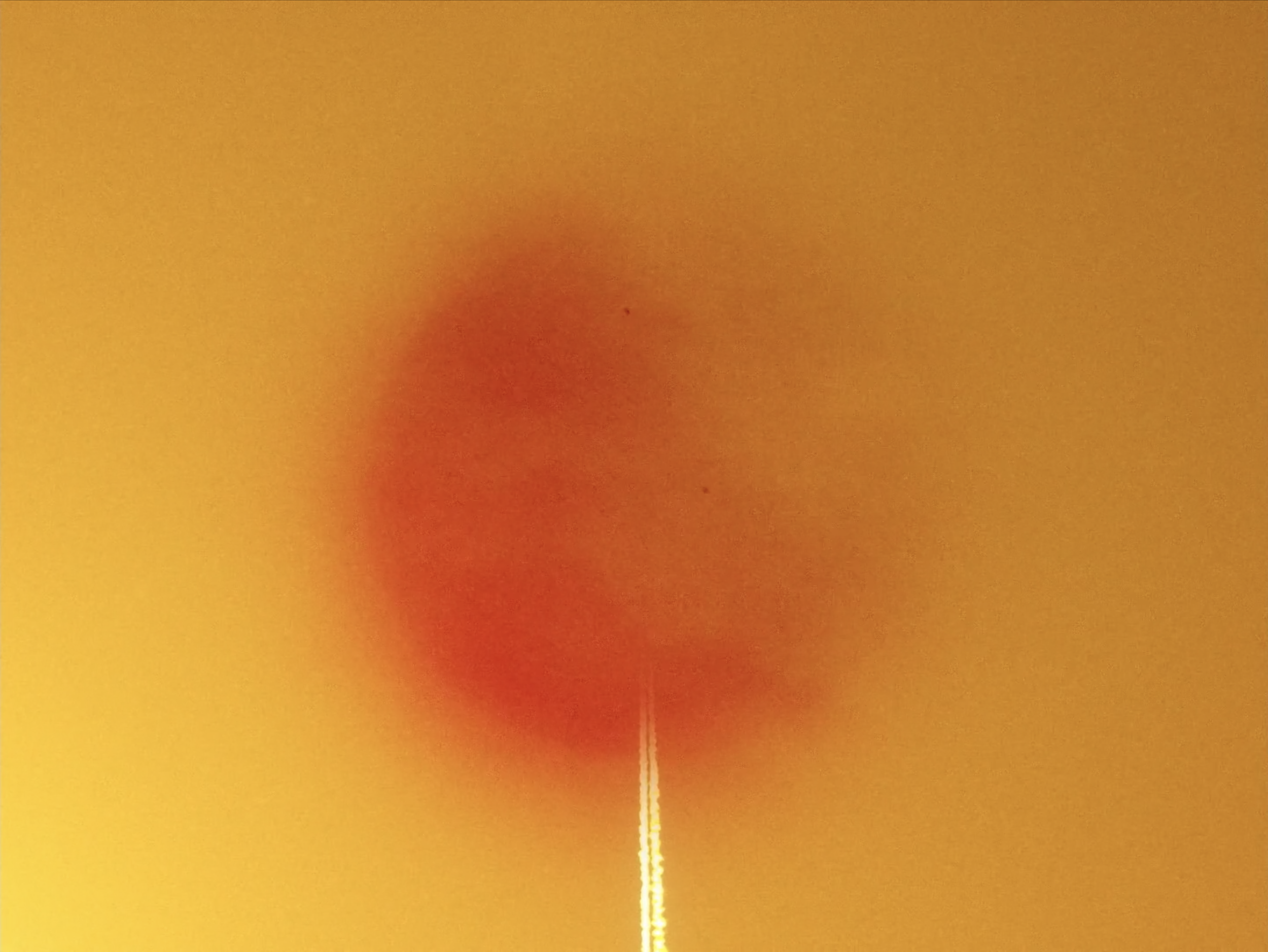
M: Maybe we can talk a little more about the sequence where—one of my favorite parts—the rocket goes into the sun. And there's this close-up flame before it looks like the sun explodes. Can you tell me a little more about that shot and how you assembled that sequence, and how you prepped for it?
RV: That sequence came through collaboration with my dear friend Elise Simard, who's an animator and compositor living in Montreal. She was one of my mentors when I did some animation stuff at the NFB [National Film Board of Canada] a long time ago, and we remained close friends.
In the script, I had this idea of the universal crime is the sun gets shot out, and I was like, how are we gonna make this happen?
So for the preliminary bit, I visited Garbage Hill in Winnipeg about 5 times. It was often just me and a selection of 5 male friends and these costumes, and I would just film them doing various things, running. We had props, and we had one official shoot with SFX guys where we shot a cannon.
Around 6 PM in Winnipeg on Garbage Hill, there's a factory and it starts to billow massive amounts of smoke. So I would always try to plan the shoot when the smoke would come out. And we'd always try to capture the guys in the smoke, or close-ups of the smoke.
And then I did some studio sessions with a friend where we filmed a lot of light flares. So I basically made a barrage of images for Elise to cut together a scene, and she also used some scenes that are already available that you can buy. So she assembled it out of that. It was a long process. It really took us a minute to figure it out, because I think we would get caught up in the physics of this event. And we’d get really mind boggled and then I was like, this is an unexplainable thing, so the best way to figure out—because the idea was the sun gets shot out, but it's replaced by a false sun—so we kind of started just talking [about] action. You know, the sun kind of poops its surface, and…
M: Yeah, it's like a shell cracks off of it.
RV: Yeah, something gets revealed, and…
M: Kind of reborn.
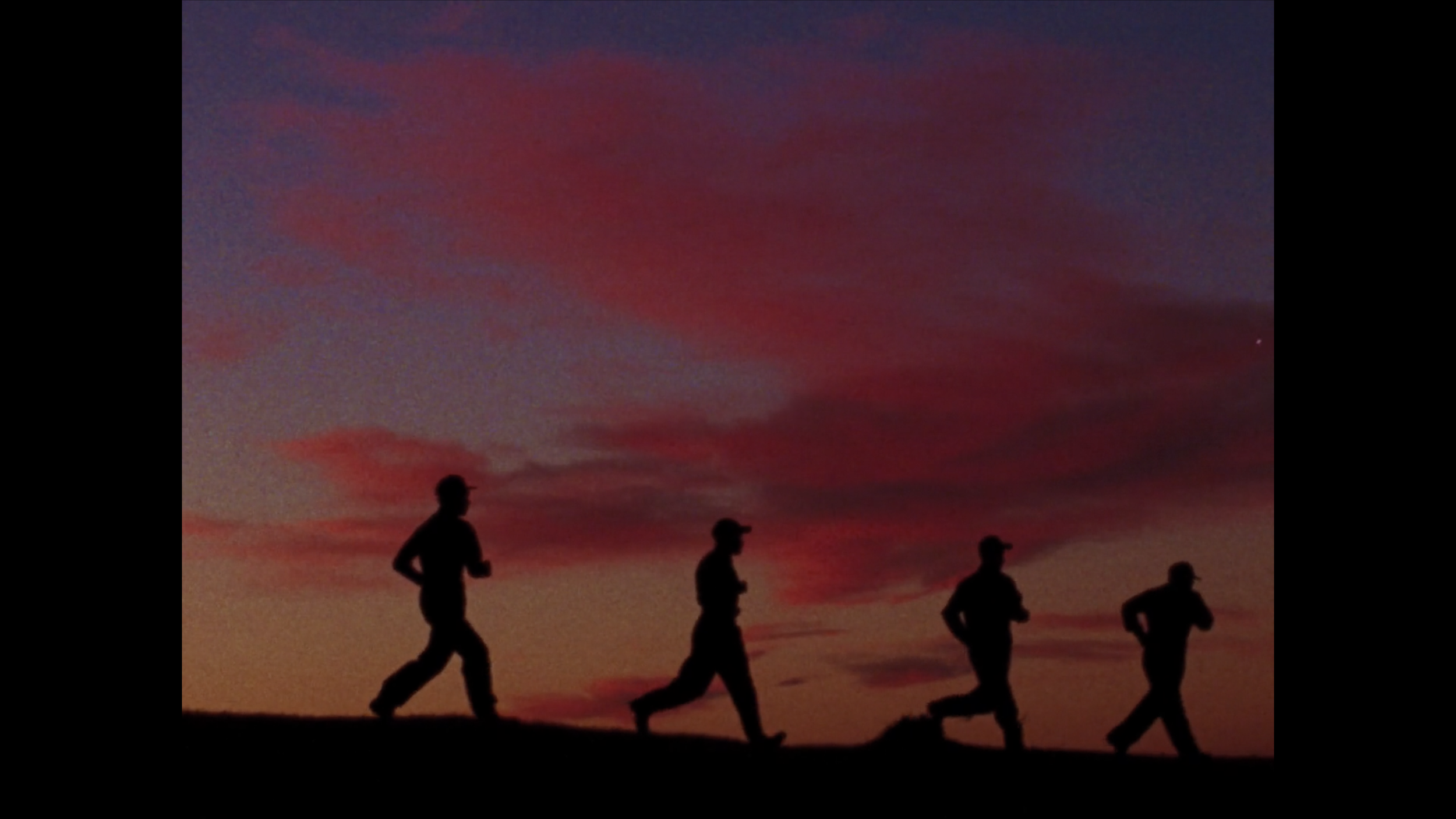
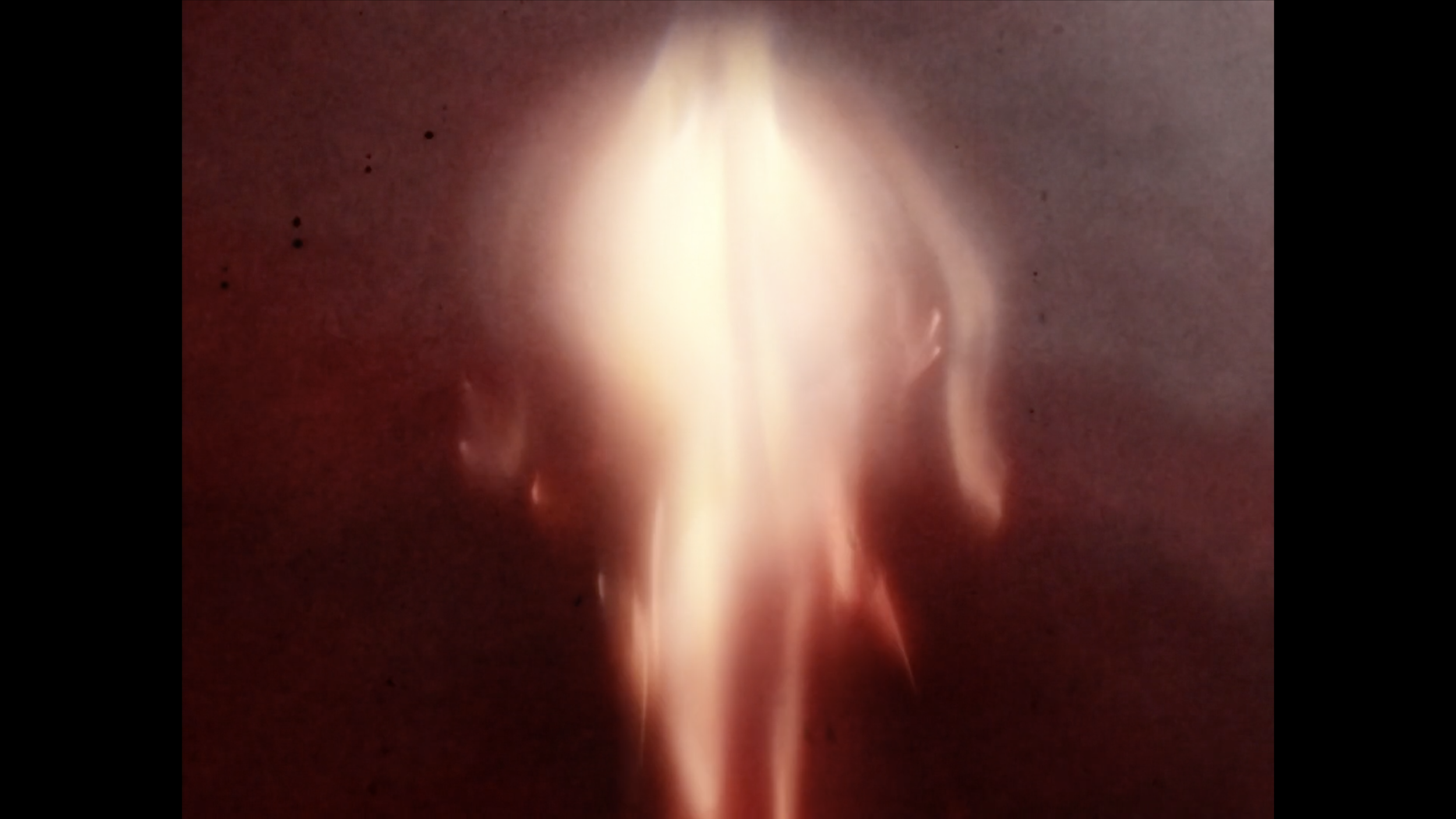
RV: And so, yeah, it was a laborious few months of back and forth and trying to figure out all the pacing and [it] turned out beyond any of my wildest dreams, to be honest. I never thought such a stunning sequence…I love how it's so beautiful, but it is the most horrendous universal crime, you know?
M: Right.
RV: These beautiful landscapes, beautiful slow motion shot[s] with a beautiful score…but you're watching the end of the world, basically.
M: Yeah. I feel like all the beautiful imagery and the beautiful score is intersected by huge crashing bang sounds as well, and so it really unsettles you.
RV: Yeah.
M: I love that sequence so much, it's very cool.
RV: I don't know, yeah. I just want to make composited movies now. [laughs]
M: I wanted to talk about how you often utilize frames within frames, like windows and doorways. It kind of makes us, the viewer, feel a little bit voyeuristic. And I read that you studied architecture before you got into film, and it kind of made me wonder if the way you're seeing things that way is connected? Does architecture influence your framing?
RV: Maybe. I started using a camera at the School of Architecture. It was kind of my favorite tool. When I got there, I realized I didn't really want to make buildings. I kind of just wanted to move between walls, and that's how I started animating. I didn't know that it was animation, but I just was like, oh, if I can take a bunch of pictures, I can move through this simple model. And a lot of these models were these embossed forms that were layered. I love layers of dense forms.
So I feel like it was just a natural progression from this interest in layers and form. Again, confusing things…my friend was like, your movie's like boxes within boxes within boxes.
M: There's also the bit where everyone's going to see the rock that's behind fencing. And that feels like its own kind of maze, but it's also very architectural, and it reminded me of…have you ever gone to see Stonehenge? It’s so separated, and you can't get close to it, and it has all this energy and power, but you can't even have a connection with it.
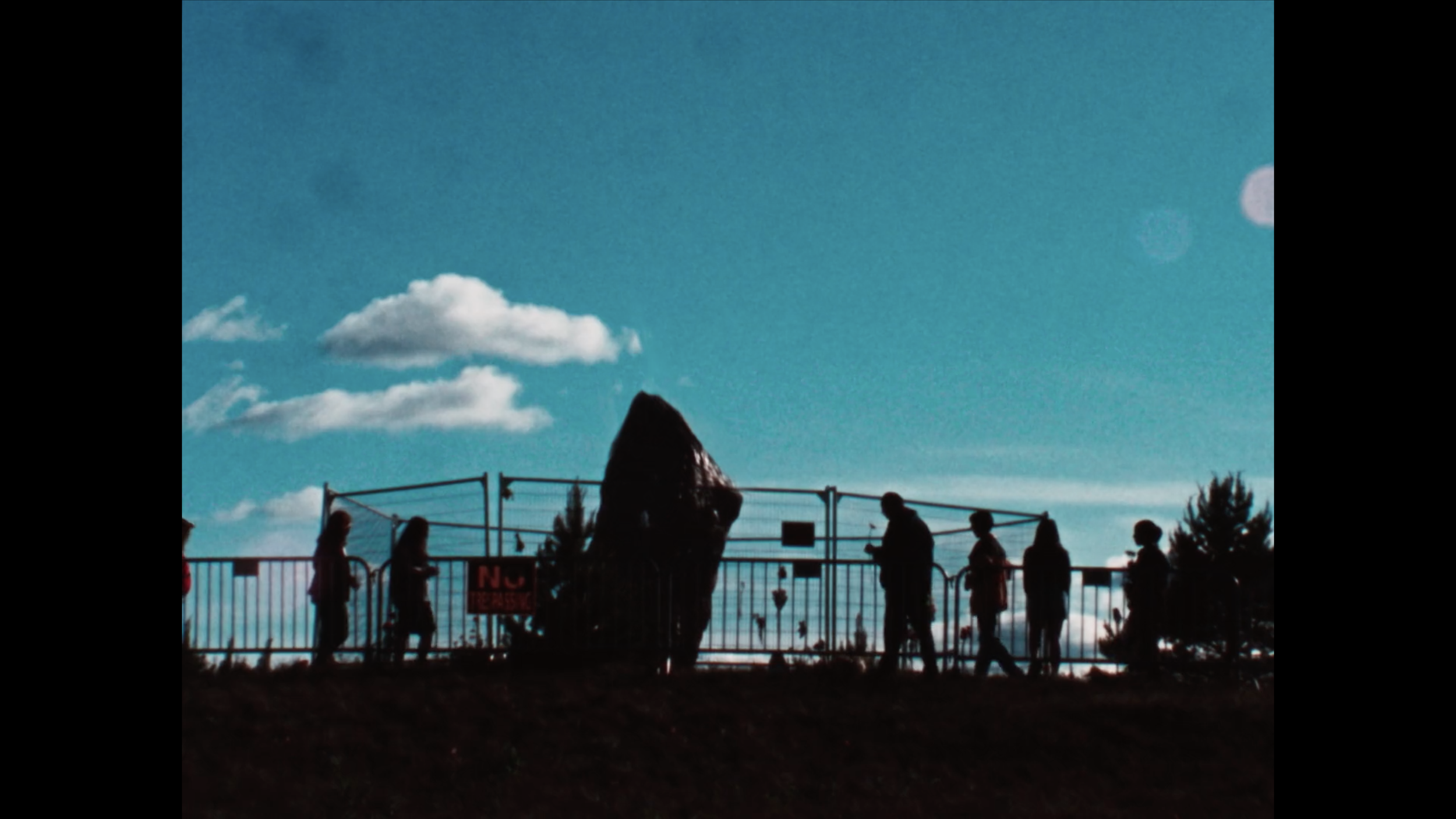
RV: Yeah, that rock thing was inspired by this sacred Indigenous rock. I feel like it's called Sleeping Buffalo Rock in Montana. My friend was working on Tasha Hubbard's movie—her buffalo movie [ed. note: Singing Back the Buffalo]—and they went to visit it.
In cities they have these [benches] but [there’s] chicken wire, and there's a bunch of rocks [inside] and I'd just be like, we need to free the rocks, these are so ugly. And a bunch of crud gets into them. And then my friend was with Tasha working on this film, and they visited this rock. And she's like: “speaking about ‘free the rock,’ there's this Sleeping Buffalo Rock…” The story is it was on land, it was sacred, the land got bought up by settlers…and this rock would scare people, because it would move around and apparently it would make noises, and it was unsettling. What was done is this rock was taken, it was literally put in a cage. And there's a roof over it so it doesn't even get sunlight and another sacred rock was thrown in [with] it. So this idea of caging the unknown and caging that which is sacred became this rolling idea, so it's kind of an homage to that rock, which breaks my heart.
M: I know, that makes me really sad. It also just makes me feel like humans are so strange. Why are we doing that?
RV: We're the worst. East of Winnipeg, there's a lake where there's somewhat of an alien rock in the bush. My friend just recently went and it's all caged up [too].
M: Oh my gosh.
RV: Premonitions abound…it feels like a very prophetic film, to be honest. I don't make films about things I understand; I don't make a film being like, this is what I wrote, this is what I shot, this is what it is. I figure out these questions about the world and my positioning in it while I make these films. And I really feel like I tapped into a weird prophecy when I made this one for some reason.
“I figure out these questions about the world and my positioning in it while I make these films. And I really feel like I tapped into a weird prophecy when I made this one for some reason.”
M: I agree. Can you tell me a little bit more about the Bolexes, and the situation there? I know they were broken; were you rotating between them? You just knew you wanted to use them?
RV: Yeah. And that was because I did Agatha's Almanac, [and] we shot for 6 years, and I was lugging around an ARRI SR3 in the garden under 30 degree weather, with no camera assistant most days.
M: Oh wow.
RV: And yeah, this camera weighs more than me when it's on the tripod. Dead Lover also was shot on an ARRI SR3, where I had a camera assistant, but it was so…Grace [Glowicki] would always be like, I want you looking down at me, [and] it'd be like, nooooo…
M: Don't make me.
RV: I gladly did it, but it's a heavy camera and it would take [us] a minute to get it up.
On the set of Dead Lover, Ryan [Steel] would grab the Bolex and be whipping around, and I was always like, I'm soooo jealous of the Bolex guy. [laughs] The SR3 is beautiful; I used it for my film St. Anne, and it captures the landscape like no other, and it's nice to have long takes. And then, again, this idea of paying people really well…setting up the SR3 and changing shots, I really felt like I was confined. I felt like with a Bolex, we could whip around, we could have shorter days. So basically people could do an 8-hour day, but get paid like they did a 16-hour day.
I just had 3 cameras. I dropped one one time—it was the sacrificial Bolex, but it actually was the last Bolex standing.
There was always something off. Footage would come in, [and] there would always be something askew…
I wrote this scene of [a character’s] pictures coming out black, and basically manifested that for myself…where shit would come back, and [the footage] was completely black. And there [were] reshoots…
But [with] the Bolexes, a lot of the multiple exposures were done in camera. So there [were] very much pros, very much cons…[laughs]
M: Absolutely.
RV: But it was part of me wanting to simplify the form, and just [making] something stunning with minimal stuff.
M: I feel like that allows you to be more creative and spontaneous on set. The setup with a huge camera and a huge tripod and all that stuff can really slow down creativity.
RV: Yeah—[the ARRI] great, it's amazing; I'm sure I'll use that camera again…I was just feeling jealous of the Bolex guy. But there were times on set where, because Ryan [Steel] worked with me on Dead Lover, and he worked with me on Levers, and [he’d] be like “Rhayne, let's just get the ARRI, let's just get the ARRI.” I was like, “No! We're not getting the ARRI…” I was like, “We're committing—we're all frustrated, but we're committing to the Bolexes.”
M: I know you mentioned Ektachrome. Did you change film stocks depending on the scene, or did you stick with one throughout?
RV: Mostly Ektachrome. Sometimes it was super dark, and especially on a reshoot, we went and did 500T just to make sure we got it.
M: Do you have a favorite shot or scene in the film? Or maybe one you're most proud of?
RV: I'm really proud of [the shot of] the mirror in the back of the truck being transported…
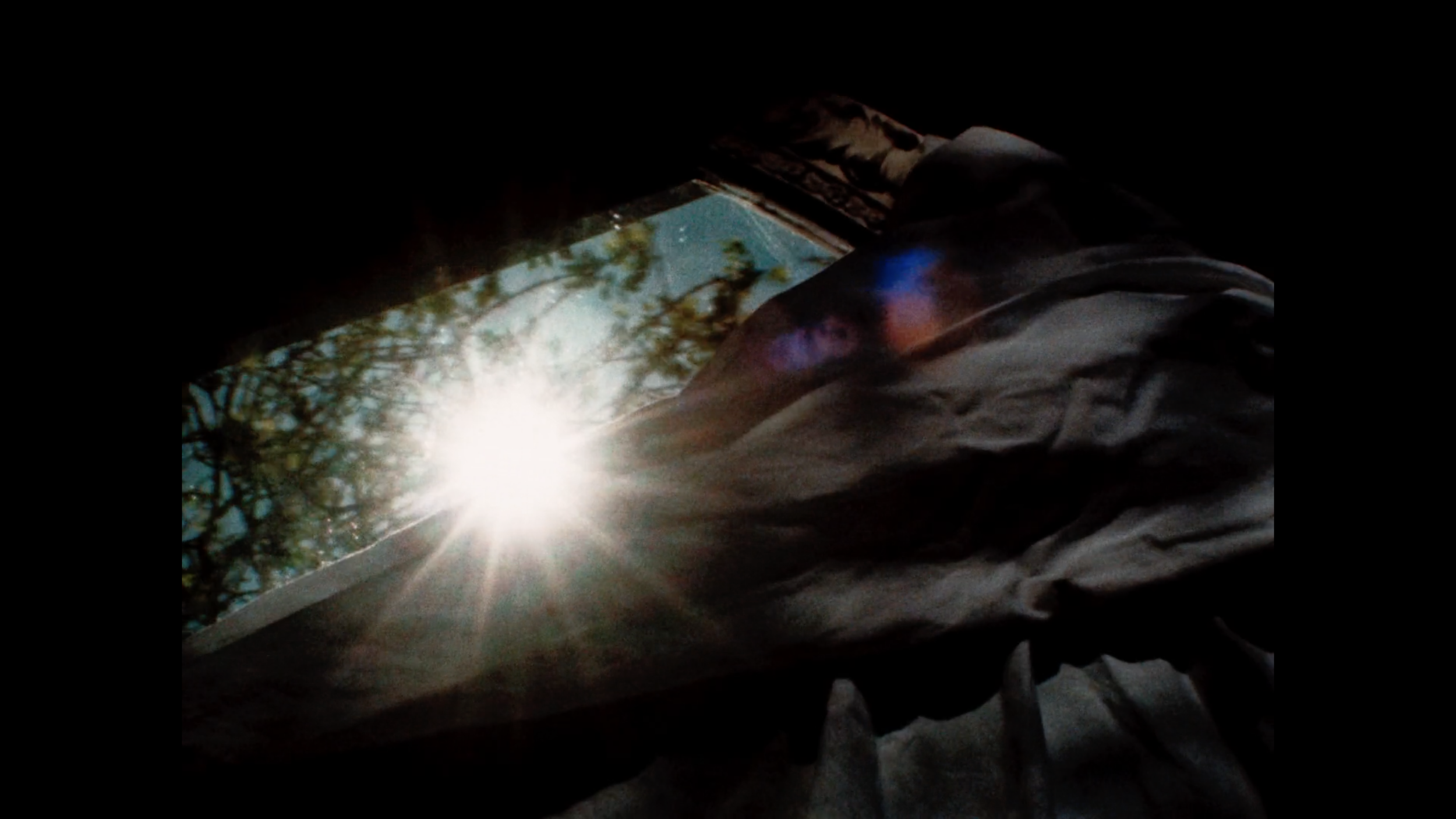
RV: Seeing the sun in there. There's a great shot of Andrina and she's cleaning up against the rock, and you see her pass. She cuts the frame, and then you see her shadow on the cage. The scene of Val dropping the tears I'm proud of, because I was able to catch all that motion.
M: Oh my gosh, that was beautiful.
RV: Honestly, I'm proud of the film as a whole. Oh, the sculpture being erected, that was shot from the hip—I saw they were putting it up, and I turned around, and I just shot and prayed that I got it.
M: Oh wow.
RV: The guys running on the hill…
M: That's probably my fave. Where do you find inspiration? Are there any other filmmakers or cinematographers whose work inspires you?
RV: Poets! I get inspiration from poets, I get inspiration from musicians. I'm not a film watcher, I'm not a film bro, I'm not a film nerd. I reject it, actually. [laughs]
“I'm not a film watcher, I'm not a film bro, I'm not a film nerd. I reject it, actually.”
M: I like that answer.
RV: Yeah, poets are always speaking in images and inspire me.
M: Do you have a favorite poet or one you're really jamming on right now?
RV: Henry Dumas is my favorite. He was a friend of Sun Ra’s. He's touched me deeply.
M: Okay, I gotta check him out.
RV: Yeah, please do. And his short stories are incredible also. Gone too soon, Henry Dumas…
M: What are you working on next?
RV: Nothing. I'm taking a break. [laughs] I have not one creative thought in my brain at this moment, so I'm taking it easy.
M: Do you have a few more festivals you're going to and scouting the film around?
RV: I'm touring the film, working as an editor…I'll need a job in a month and a half, hoping something comes through. Yeah, I don't know what's next for me. It's a funny time.
M: It is. It's a very odd time.
RV: Yeah, yeah.
M: Thank you so much, this was wonderful.
RV: Thanks, Hilary.